
In the world of complex construction and facade restoration, getting from Point A to Point B isn’t always a straight line—it’s often a vertical climb. But when standard “out-of-the-box” scaffolding doesn’t fit the architectural footprint or the project timeline, what’s the solution?
In the world of complex construction and facade restoration, getting from Point A to Point B isn’t always a straight line—it’s often a vertical climb. But when standard “out-of-the-box” scaffolding doesn’t fit the architectural footprint or the project timeline, what’s the solution?
Enter Temporary Vertical Access Design.
At Charlesworth Engineering, we’ve seen how improper access planning can turn a profitable project into a logistical nightmare. Here is why bespoke vertical access design is the secret weapon for modern contractors and how it protects your bottom line.
What is Temporary Vertical Access Design?
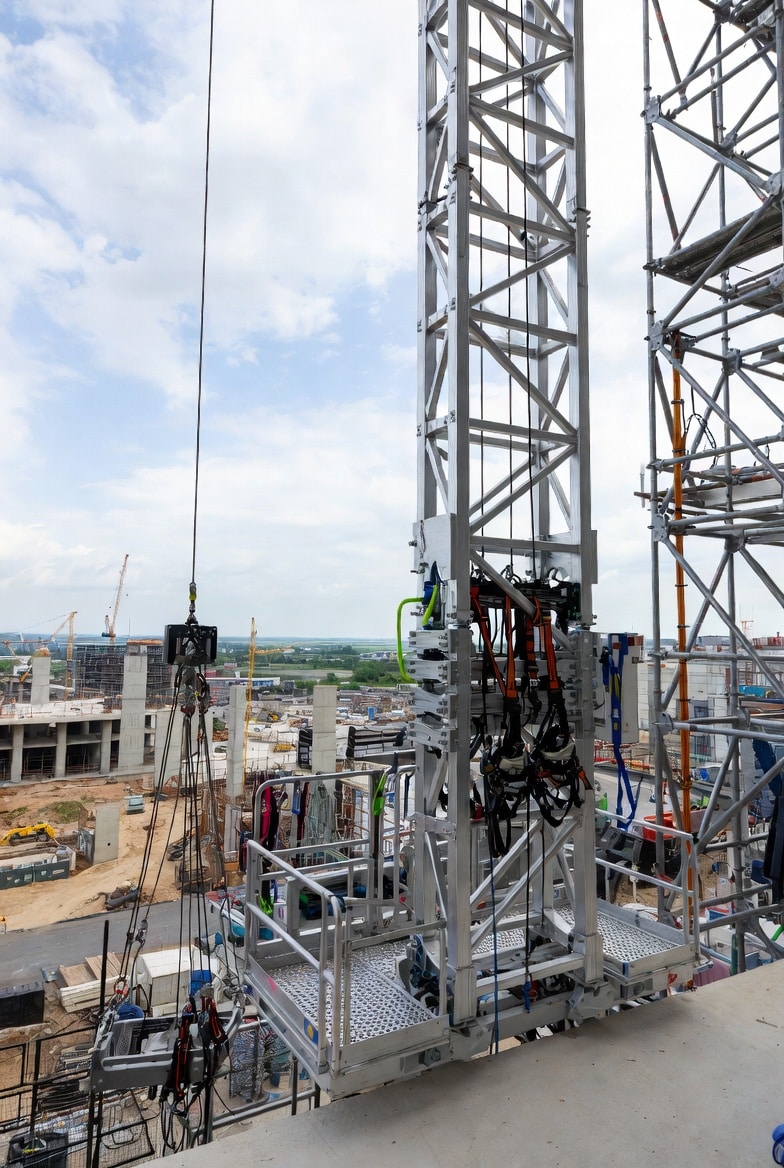
It’s more than just a ladder or a hoist. It is the engineered integration of systems—such as mast climbers, modular platforms, suspended cradles, and bespoke scaffolding—designed to facilitate the safe movement of personnel and materials on a vertical plane.
Unlike permanent installations, these systems are designed for high-stress, short-duration use, requiring a deep understanding of BS 5975 standards, wind loading, and structural integrity.
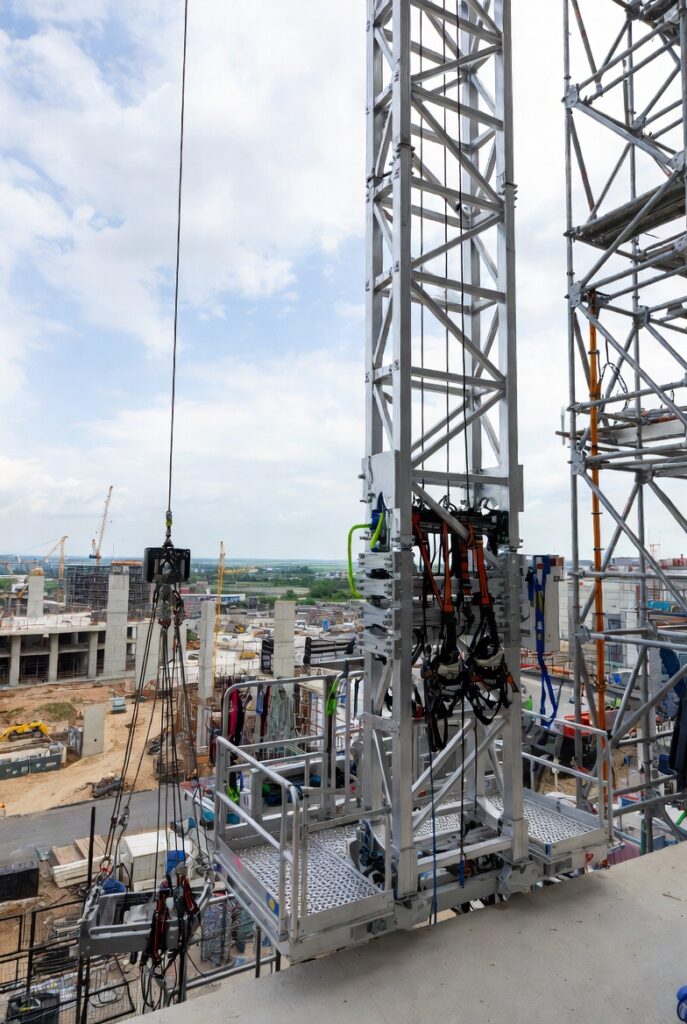
Image Generated by GEMINI
3 Ways Engineered Access Beats Standard Scaffolding
1. Navigating Complex Geometry
Modern architecture loves curves, cantilevers, and setbacks. Standard scaffolding often struggles with these “hard-to-reach” areas. Bespoke design allows for hybrid solutions—combining rope access points with modular platforms—to ensure your team can reach every inch of a facade without the cost of a full-wrap scaffold.
2. Maximizing Site Efficiency (Vertical Logistics)
Congestion at the base of a site is a primary cause of delays. By designing optimized vertical transit routes, you reduce “wait time” for hoists and platforms. Efficient vertical logistics mean materials arrive on the 20th floor exactly when the crew needs them, not three hours later.
3. Mitigating Risk and Liability
Safety isn’t just about harnesses; it’s about structural math. Temporary works are often stressed to 90% of their capacity. An engineered design from Charlesworth Engineering provides:
-
CAT3 Independent Checks: Ensuring the design is bulletproof.
-
Wind Load Analysis: Vital for tall structures where gusts can turn platforms into sails.
-
Compliance: Meeting all health and safety regulations to minimize insurance premiums.
Why Choose Charlesworth Engineering?
With over 250 completed projects, we bridge the gap between complex design and practical on-site execution. Our temporary vertical access solutions are designed to be safe, efficient, and elegant, supporting the people who build and the communities they serve.
Ready to elevate your next project? View our Temporary Vertical Access Services or contact our team today for a consultation.